1. Introduction
In the fast-paced environment of modern healthcare, efficiency and organization are paramount to delivering quality patient care. Most types of medical trolleys have become indispensable tools in hospitals, clinics, and various healthcare settings, serving as mobile workstations that streamline workflows and ensure critical supplies are readily accessible when needed.
These versatile pieces of equipment come in numerous designs, each tailored to support specific medical functions and procedures. From emergency response to medication distribution, the right hospital trolley can significantly enhance healthcare delivery while reducing staff fatigue and improving patient outcomes.
As healthcare facilities continue to evolve, so too does the design and functionality of trolleys. Today’s market offers an impressive array of options, each engineered to address particular clinical needs while meeting stringent hygiene and safety standards. Let’s explore the various types of hospital trolleys used in hospitals and their unique features that make them essential components in healthcare environments
2. Types of Trolleys Used in Hospitals
Emergency Trolleys
These types of hospital trolleys are a critical component in any healthcare setting where rapid response to life-threatening situations is necessary. These specialized trolleys are designed to be instantly accessible and easily manoeuvrable during medical emergencies.
Each emergency trolley is meticulously organized with life-saving equipment and medications arranged in a standardized layout, allowing healthcare professionals to locate essential items quickly without confusion.
The design of emergency trolleys prioritizes mobility and durability, featuring smooth-rolling, anti-static wheels that enable swift movement across various floor surfaces. Most models include lockable drawers with clear labelling systems to ensure contents remain secure yet readily accessible when needed.
These trolleys are commonplace in intensive care units, emergency departments, operating theatres, and general wards where patients may require immediate intervention. Regular inventory checks and restocking protocols ensure emergency trolleys are always prepared for critical situations
Anaesthetic Trolleys
Anaesthetic trolleys play a vital role in operating theatres and procedural areas where sedation and anaesthesia are administered. They are specially configured to support anaesthesiologists and nurse anaesthetists during patient preparation, induction, maintenance, and recovery phases.
The design of anaesthetic trolleys reflects the specific workflow of anaesthesia delivery, featuring:
- Dedicated compartments for anaesthetic drugs and controlled substances
- Storage space for airway management equipment
- Mounting options for monitoring devices
- Drawer systems organized by procedure type or medication category
- Work surfaces for medication preparation
High-quality anaesthetic trolleys incorporate antimicrobial materials and smooth surfaces that facilitate thorough cleaning and disinfection between cases.
The mobility of these medical carts allows for flexible positioning during procedures, ensuring anaesthesia providers can maintain optimal patient access while keeping essential supplies within reach.
Medication Trolleys
Medication trolleys are purpose-built to support safe and efficient medication storage, preparation, and administration throughout healthcare facilities. They enhance medication management by providing a mobile, secure environment for handling pharmaceuticals.
Key features of medication trolleys include:
- Individually lockable drawers or compartments
- Adjustable dividers for organized medication storage
- Flat, easy-to-clean work surfaces for medication preparation
- Integrated sharps containers for safe disposal
The design of medication trolleys prioritizes patient safety through features that support the “five rights” of medication administration—right patient, right drug, right dose, right route, and right time.
Healthcare facilities typically deploy these hospital trolleys in medical-surgical units, long-term care settings, and other areas where regular medication administration is required.
Dressing Trolleys
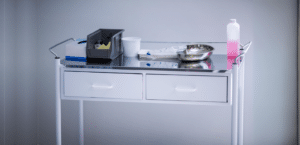
Dressing trolleys, also known as procedure or treatment trolleys, facilitate wound care, dressing changes, and minor procedures across various healthcare settings. These versatile carts provide a clean, organized mobile workstation for clinicians performing bedside procedures.
The typical dressing trolley features:
- Two or three shelves with raised edges to prevent items from falling
- Removable trays for easy cleaning and sterilization
- Space for dressing materials, antiseptics, and wound care products
- Dedicated areas for clean and soiled items
- Waste disposal attachments
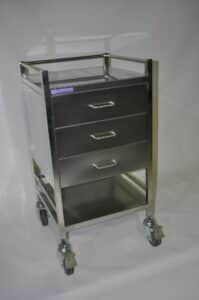
Materials used in dressing trolleys typically include stainless steel or high-grade medical polymers that withstand frequent cleaning with hospital-grade disinfectants. This ensures compliance with infection control protocols while maintaining structural integrity over time.
Healthcare professionals in wound clinics, burn units, dermatology departments, and general inpatient areas rely on these types of trolleys used in hospitals to maintain aseptic technique during procedures. The mobility of dressing trolleys allows care to be brought directly to patients, reducing unnecessary movement and potential discomfort.
Surgical Instrument Trolleys
Surgical instrument trolleys are specialized equipment designed for the organized transport and presentation of sterile instruments during surgical procedures. They serve as mobile extensions of the sterile field, enabling efficient access to surgical tools while maintaining aseptic conditions.
Distinguished by their minimalist design, surgical instrument trolleys typically feature:
- Open, flat surfaces for instrument trays
- Height-adjustability for optimal positioning alongside operating tables
- Smooth, jointless construction to eliminate potential contamination points
- High-grade stainless-steel composition for durability and sterilization compatibility
- Stable bases with locking caster wheels for secure positioning
The mobility of instrument trolleys allows for flexible positioning based on surgeon preference and procedural requirements. These trolleys are essential components in operating theatres, procedure rooms, and interventional suites where sterile instruments must remain organized and accessible.
Isolation Trolleys
Isolation trolleys play a crucial role in infection prevention and control strategies, particularly in environments where patients with communicable diseases are treated. They medical trollhelp healthcare workers maintain appropriate isolation precautions while delivering necessary care.
Isolation trolleys are typically stationed outside isolation rooms and equipped with:
- Compartments for various sizes and types of personal protective equipment (PPE)
- Clear organization systems for donning and doffing sequences
- Integrated hand hygiene stations (alcohol-based hand rub or gloves)
- Waste disposal options for contaminated PPE
- Information holders for isolation precaution signage and protocols
The design of isolation trolleys prioritizes logical workflow patterns that reinforce proper infection control practices. Materials used in these types of are selected for their compatibility with frequent cleaning and disinfection, helping to prevent cross-contamination between patient areas.
Healthcare facilities utilize isolation trolleys in infectious disease units, emergency departments, and anywhere isolation precautions may be implemented. During outbreaks or pandemic situations, these trolleys become even more essential in supporting systematic infection control measures throughout the facility.
CPR Trolleys
CPR trolleys are specialized emergency equipment designed specifically for cardiopulmonary resuscitation scenarios. These purpose-built medical trolleys contain all necessary equipment for responding to cardiac arrests, allowing healthcare teams to deliver prompt, organized resuscitation efforts.
The configuration of CPR trolleys follows established resuscitation algorithms, with the most immediately needed items positioned for quick access. These types of hospital carts feature highly visible colors or markings for rapid identification during emergencies and are strategically positioned throughout healthcare facilities according to response time guidelines.
Regular simulation training with CPR trolleys helps staff maintain familiarity with equipment locations and resuscitation workflows, ultimately improving outcomes during actual emergencies.
3. Key Features to Consider When Choosing a Critical-Care Trolley
Several key factors should influence your decision when deciding from the types of trolleys used in hospitals.
Material Quality: The construction material significantly impacts durability and infection control. Stainless steel offers superior hygiene and longevity, with resistance to corrosion from cleaning chemicals and the ability to withstand frequent sanitization. ABS plastic provides lightweight mobility and is ideal for less intensive applications where weight is a concern. Aluminium combines strength with reduced weight, offering a middle ground between durability and manoeuvrability.
Mobility Factors: Effective trolleys must move efficiently through busy healthcare environments. Premium castors ensuring smooth rolling across different flooring materials, including carpet, tile, and threshold transitions. Ergonomic handles positioned at appropriate heights reduce staff strain during transport, while directional locking mechanisms improve steering in crowded corridors. Braking systems must provide reliable stability when stationary, especially during procedures or when positioned on inclines.
Storage Organization: Thoughtful design enhances functionality with drawer configurations matching specific department needs. The ideal organization system allows for intuitive access to frequently used items while securing fewer common supplies in logical locations. Adjustable shelving accommodates various equipment sizes and can be reconfigured as departmental needs evolve. Modular components allowing customization to ensure the trolley remains relevant even as medical practices advance. Look for dividers, inserts, and labelling systems that facilitate quick visual identification of contents.
Safety Considerations: Patient and staff safety remains paramount in healthcare environments. Trolleys should incorporate lockable compartments securing valuable or dangerous items, particularly medications and sharps. Rounded edges preventing injury during rapid movement, while stable design with appropriate weight distribution prevents tipping when drawers are extended. Anti-microbial coatings on high-touch surfaces provide an additional layer of infection control in some premium models.
Maintenance Requirements: The practical aspects of long-term trolley maintenance should factor into selection decisions. Easy-to-clean surfaces without difficult-to-reach crevices save valuable staff time during terminal cleaning. Removable components that can be separately sanitized extend the trolley’s usable life. Availability of replacement parts ensures minor damage doesn’t necessitate complete replacement. Regular maintenance schedules should be simple to implement without specialized tools or expertise.
4. Benefits of High-Quality Medical Trolleys
Investing in premium yields significant advantages across multiple dimensions of healthcare delivery:
Enhanced Workflow Efficiency
Well-designed trolleys serve as mobile workstations that bring necessary supplies directly to the point of care. This proximity eliminates unnecessary trips to supply rooms or medication dispensaries, allowing healthcare professionals to maintain focus on patient care.
The standardized organization of high-quality trolleys also reduces search time for supplies, streamlining procedures and interventions. This efficiency becomes particularly valuable during emergencies when seconds matter.
Improved Safety and Hygiene
Quality critical-care trolleys incorporate features that enhance patient safety through proper medication management, secure storage of controlled substances, and organization systems that reduce the risk of errors. Lockable compartments ensure that potentially harmful items remain inaccessible to unauthorized individuals.
From an infection control perspective, medical carts constructed with appropriate materials facilitate thorough cleaning and disinfection between uses. Seamless surfaces, antimicrobial properties, and compatibility with hospital-grade disinfectants contribute to maintaining hygienic conditions in patient care environments.
Long-term Cost-Effectiveness
While some medical carts may represent a higher initial investment, their durability and functionality deliver superior long-term value. High-quality trolleys resist damage from daily use, maintain smooth operation of moving parts, and withstand the rigors of healthcare environments for many years.
The organizational efficiency provided by well-designed trolleys also generates ongoing operational savings through reduced supply wastage, improved inventory management, and enhanced staff productivity. When considering total cost of ownership, investing in quality instrument trolley proves economically advantageous over time.
5. Why Choose Advance Trolleys?
When selecting healthcare transportation solutions, Advance Trolleys stands apart through their unwavering commitment to quality materials and construction techniques. Our products undergo rigorous testing to ensure they meet the demands of daily healthcare operations, with attention to details that impact usability and longevity. This dedication to quality results in trolleys that maintain their functionality and appearance even after years of intensive use.
We offer customizable options tailored to specific department requirements, recognizing that different healthcare specialties have unique needs. Rather than providing one-size-fits-all solutions, Advance Trolleys works with facilities to understand their workflows and challenges, resulting in configurations that genuinely enhance operational efficiency. This consultative approach ensures that trolleys integrate seamlessly into existing systems rather than requiring staff to adapt to standardized designs.
Advance Trolleys prioritizes user-centred design developed with healthcare professional input throughout the product development process. This collaboration with end-users results in intuitive features that address real-world challenges faced by healthcare workers. Ergonomic considerations reduce physical strain during long shifts, while thoughtful organization systems minimize cognitive load when retrieving supplies under pressure.
Your Healthcare Solution Awaits
Every healthcare organization has unique needs and operational challenges. At Advance Trolleys, we understand that one size does not fit all when it comes to medical equipment solutions.
Feel free to contact our experts at Advance Trolleys for a personalized quote or customized selections tailored specifically to your facility’s requirements. Our team specializes in helping you identify the perfect combination to streamline your operational processes, improve safety standards, and deliver cost-effective results.
Continue browsing through our website to explore our extensive collection of high-quality stainless steel trolleys and other specialized types of trolleys. Discover detailed specifications, options, and information to make an informed decision for your healthcare setting.